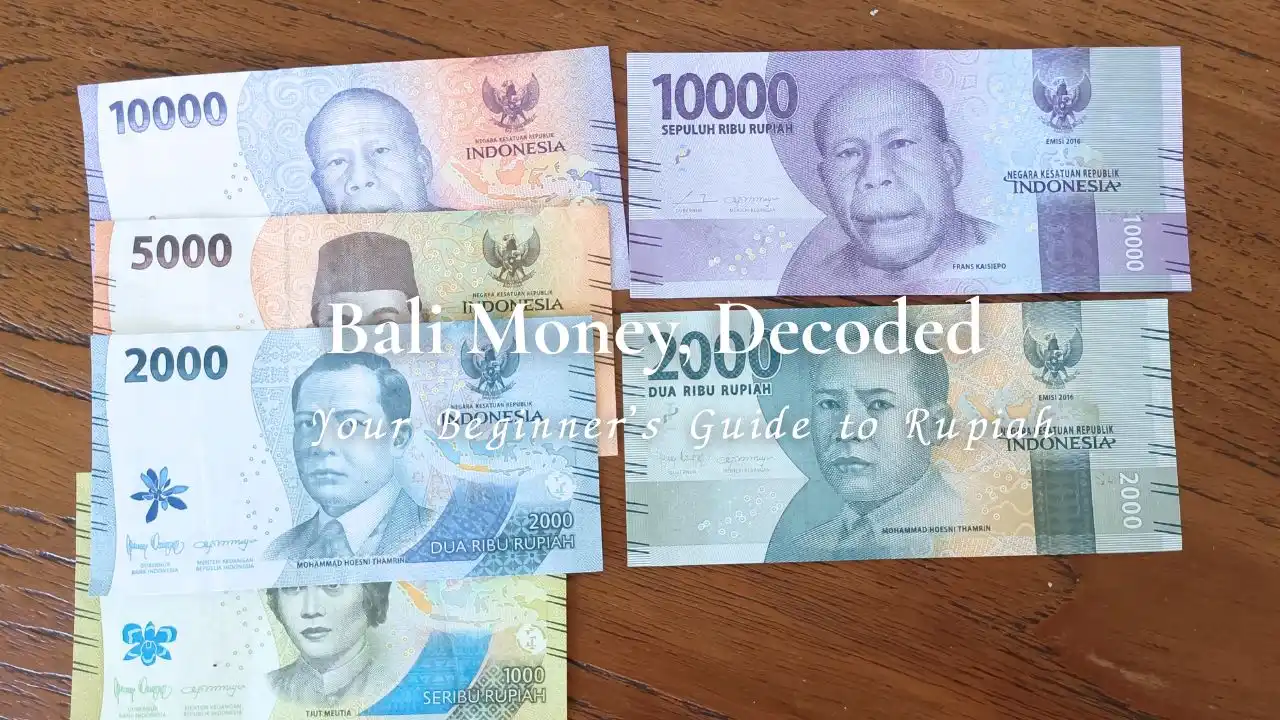
Think of IDR 10,000 as roughly 100 yen. Master this simple conversion, and you’ll master Bali’s currency.
From savvy exchange tips to tipping etiquette, here is your essential guide to navigating Indonesian Rupiah.
・Travelers struggling to grasp the local currency's value.
・Anyone overwhelmed by the long strings of zeros.
・Those who want a clear picture of daily spending in Bali.
Let’s get started!
What Kind of Currency is the Bali Rupiah?
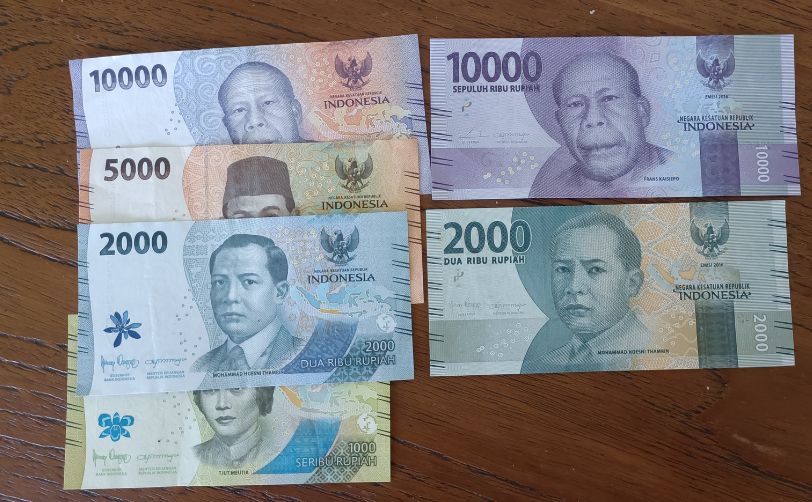
While the long strings of zeros might look daunting, the logic behind them is remarkably straightforward.
Let’s start by breaking down the different banknotes you’ll encounter on the island.
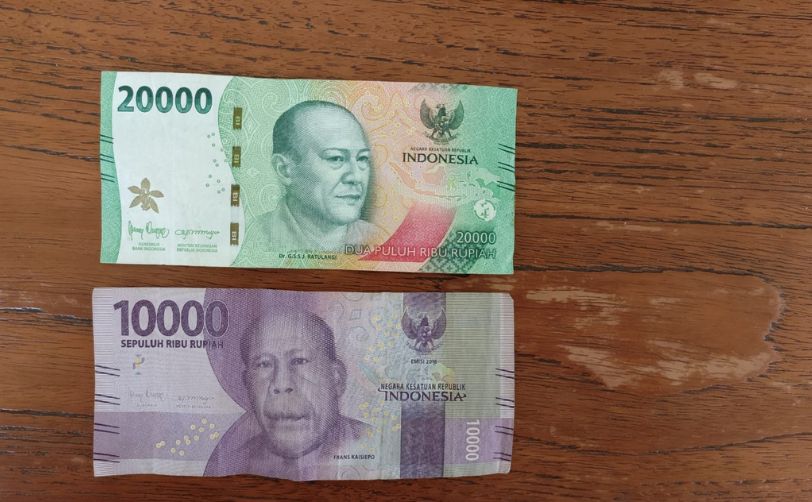
There are mainly 7 types of banknotes.
The colors are distinct, making them easy to tell apart once you get used to them.
The most commonly used bills are the 10,000 to 50,000 IDR notes.
▼ Indonesia Money Quick Reference
| Currency: | Rupiah (IDR) |
| Banknotes | 7 Types (1,000, 2,000, 5,000, 10,000, 20,000, 50,000, 100,000) |
| Coins: | 4 Types (100, 200, 500, 1,000) |
How Much is 100,000 IDR? Tips for Easy Calculation
▼ The Largest Bill: 100,000 IDR
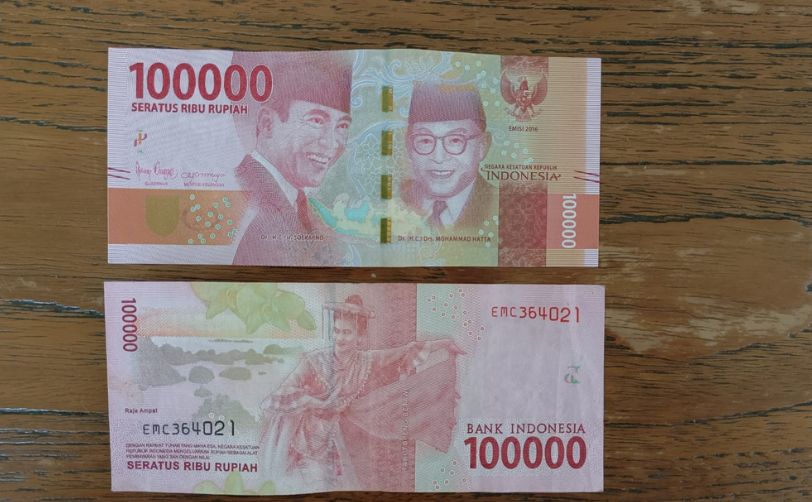
The many zeros can be overwhelming at first, but don't worry.
There is only one formula you need. Once you know it, you can put the calculator away for good.
▶︎The Golden Rule: Just drop two zeros. IDR 10,000 equals approximately 100 to 110 yen.
50,000 IDR → approx. $3.00–$3.50
100,000 IDR → approx. $6.00–$7.00
 YUKI
YUKI*Exchange rates fluctuate daily, so please check the current rate yourself.
Just remember it as having "two extra zeros," and the mental math becomes second nature.
▼ The Smallest Bill: 1,000 IDR!
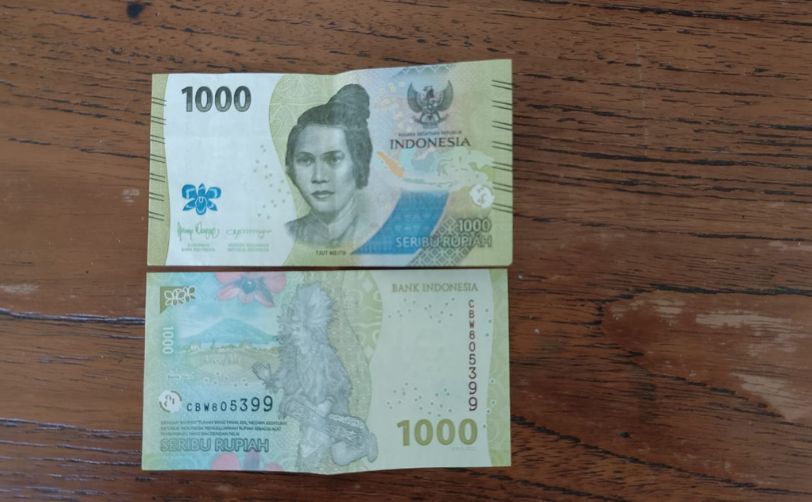
By the way, the smallest bill is 1,000 IDR (approx. $0.06).
YUKIA rare find in the wild—likely because the IDR 1,000 coin is so common.
▼ Both New and Old Banknotes are Valid
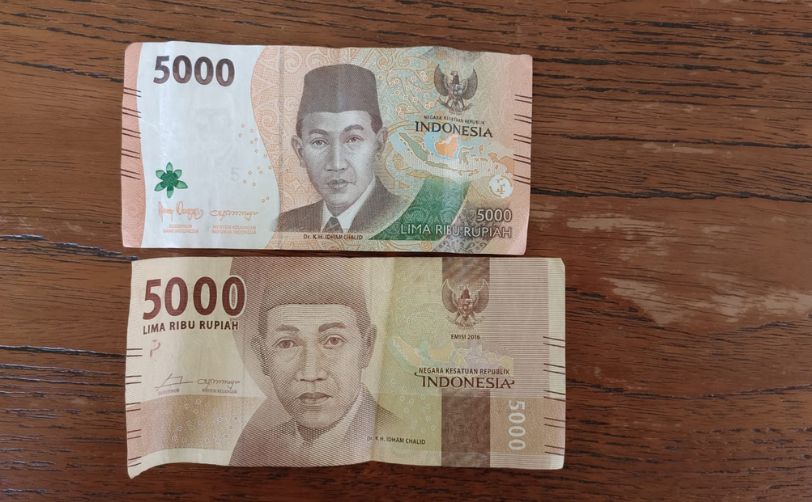
The top bill is the new series, and the bottom is the old one. The new bills are slightly smaller.
Where to Exchange Money? Timing and Tips
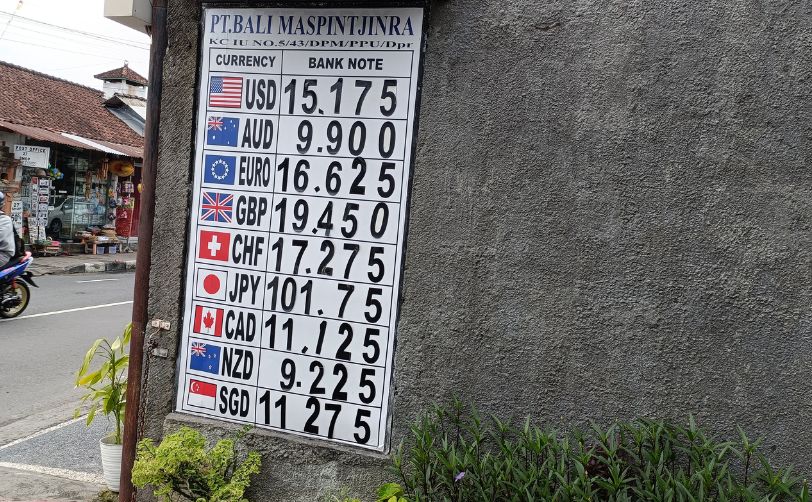
In Bali, you can exchange your money in various locations, including the airport, around town, and at hotels.
Exchange rates vary significantly, so choosing the right spot is key to making your yen go further.
✅ Airport: Convenient for immediate use upon arrival, but rates are slightly lower.
✅ Local Money Changers: Better rates, but avoid places with "too good to be true" rates or those in back alleys.
✅ Hotels & Malls: Reliable and safe, but usually more expensive due to service fees.
I’ve also put together a few important points to keep in mind.
💡 Important Tips
Be cautious of shops offering rates that seem "too good to be true."
Ask for smaller bills (like 10,000 IDR) as they are very handy for small purchases.
Always count your money and verify the amount before leaving the counter!
Where to Use Cash: 4 Common Situations in Bali
Cash is still king in Bali. Knowing when and where you’ll need it helps you keep the right small notes on hand.
Restaurants and Warungs (Local Eateries)
At local warungs, cash remains the primary way to pay. Keep IDR 10,000 and 50,000 notes ready for a seamless experience.
Supermarkets and Convenience Stores
Some shops have a "minimum spend" for card use, so cash is better for small purchases.
Gojek (Ride-hailing & Delivery App)
Drivers often don't have exact change, so it’s best to have small bills (10k or 20k) ready.
Tipping Guide
While Bali doesn't have a strict tipping culture, many people give a small amount to show appreciation.
Spas: Around 20,000 – 50,000 IDR
Hotel Porters / Housekeeping: 10,000 – 20,000 IDR
Tips are generally not expected at local warungs.
YUKIPersonally, I usually aim for about 20% of the total as a tip.
Summary: You’ll Get Used to Rupiah Soon!
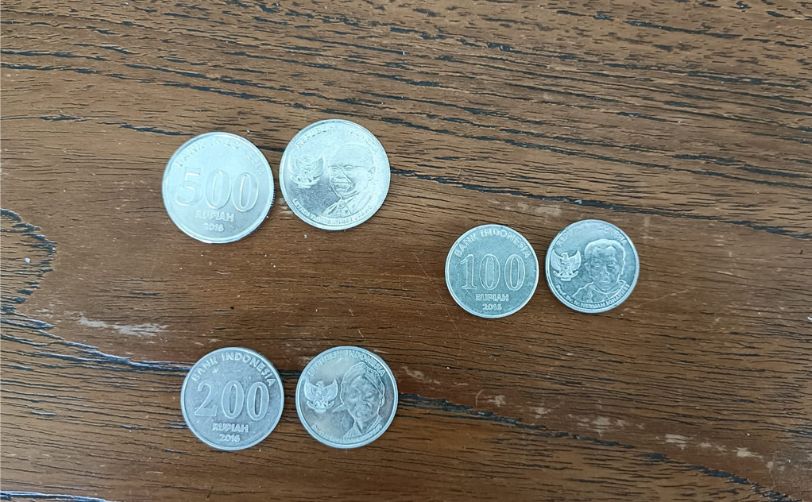
Once you use it a few times, exchanging and paying will become second nature.
\ Good to Know/
Navigating Bali's dining scene is a breeze with Google Maps and Grab right at your fingertips.Having an eSIMkeeps you connected from the moment you arrive.
👉Browse eSIM Options for Bali
Extra Tip: What does "K" mean on the menu?
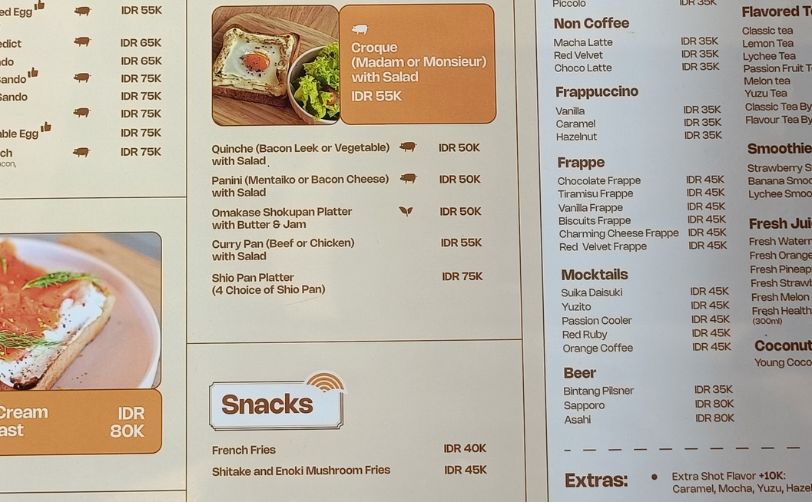
Don't let "50K" on a menu confuse you. Here is how to decode Bali’s pricing shorthand instantly.
The "K
「K」In the world of Rupiah, "K" simply stands for three zeros.。
For example...
・10K = 10,000 IDR
・ 50K = 50,000 IDR
・100K=100,000IDR
▼the "K" is missing
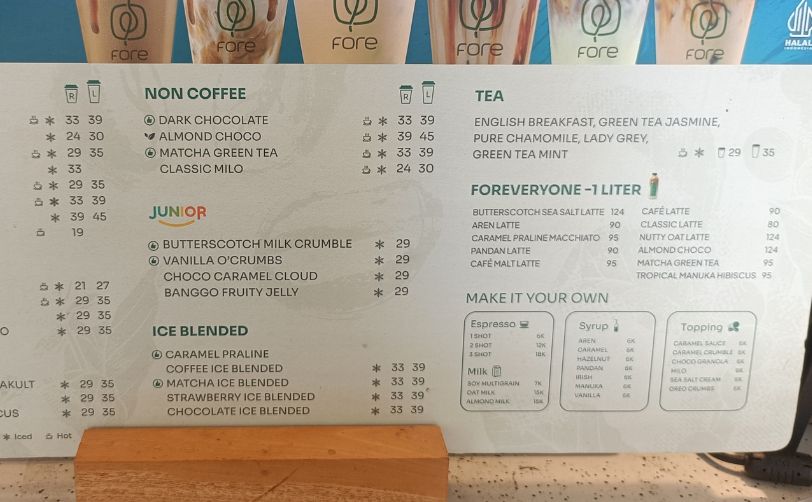
Sometimes even the "K" is missing—just the numbers are shown.
・If it says "33," it means 33,000 IDR.
・If it says "29" it means 29,000 IDR.
YUKIJust remember: if you see a small number on a menu, add three zeros!
\2 Travel Essentials to Book Ahead/
📱 Local SIM: Pick it up at the airport for immediate access to maps and exchange rates.→⇨Check Rates
🚗 Airport Transfer: Skip the stress with a pre-booked driver waiting for you, regardless of your arrival time.→⇨Check Rates
Your Go-To Travel Guide
・Tips for Currency Exchange: Avoid Common Mistakes
・Bali Visa Guide: Everything You Need to Know Before Entry
・Airport Transfers via KLOOK: How to Book from Home
YUKISee you in the next post!