
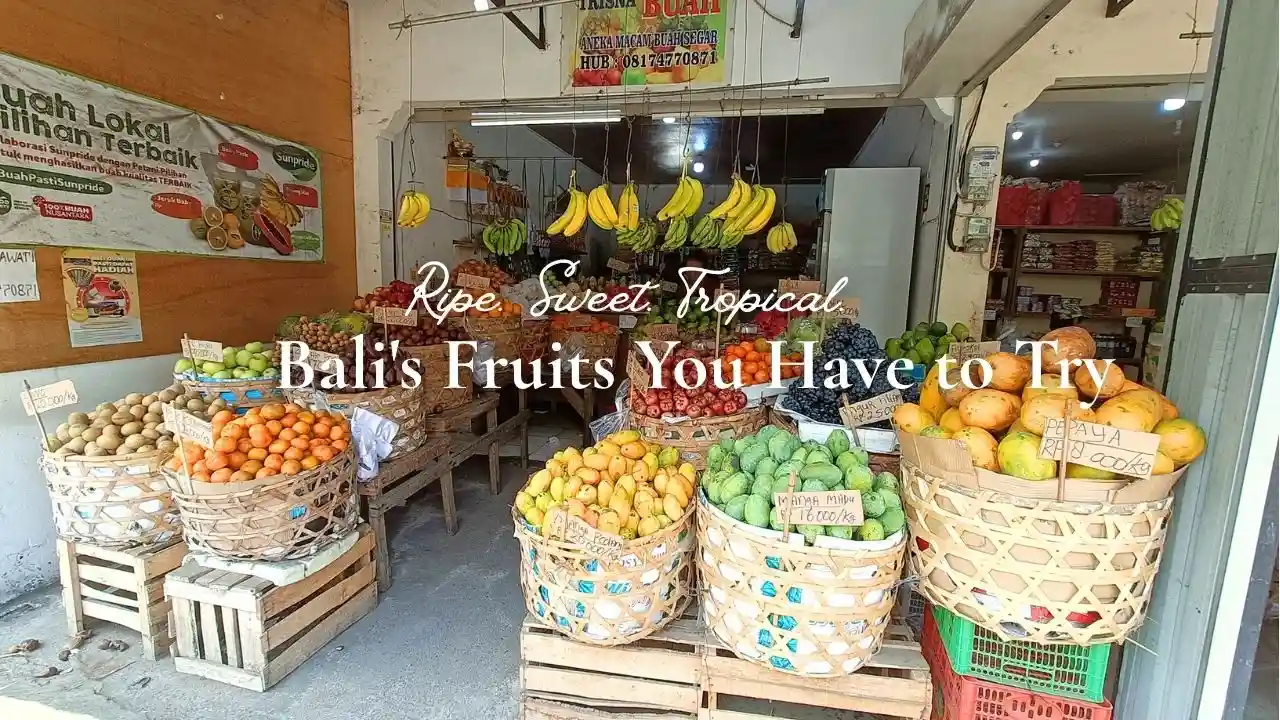
Bali's colorful tropical fruits are one of the true joys of a visit here.
Mangoes, mangosteens, passion fruit — the variety alone is worth exploring.
Here's your guide to the fruits worth seeking out during your stay.
・Anyone craving fresh tropical fruit in Bali
・Travelers up for trying something new
・Fruit lovers curious to learn more
\ Stay Connected with an eSIM /
👉 Browse eSIM Options for Bali
Where to Find Fresh Fruit
Fruit is sold all over Bali — here's a quick rundown of where to find it.
Fruit Stalls
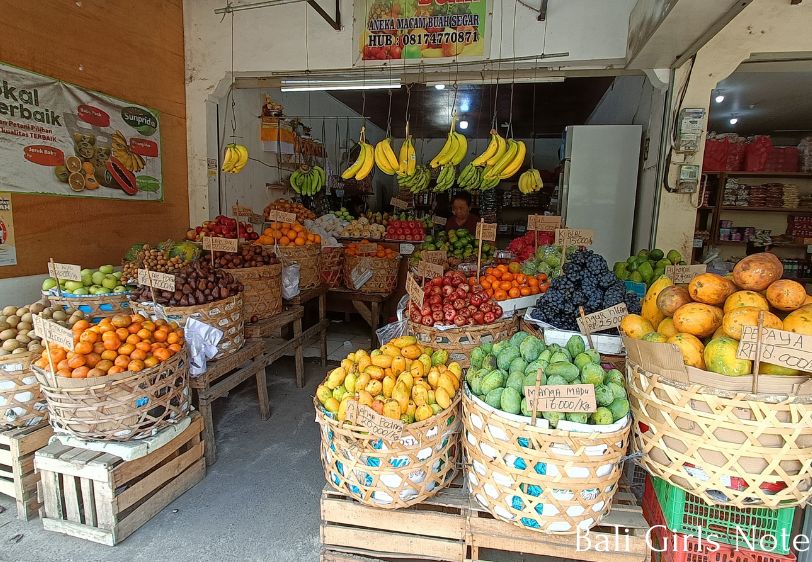
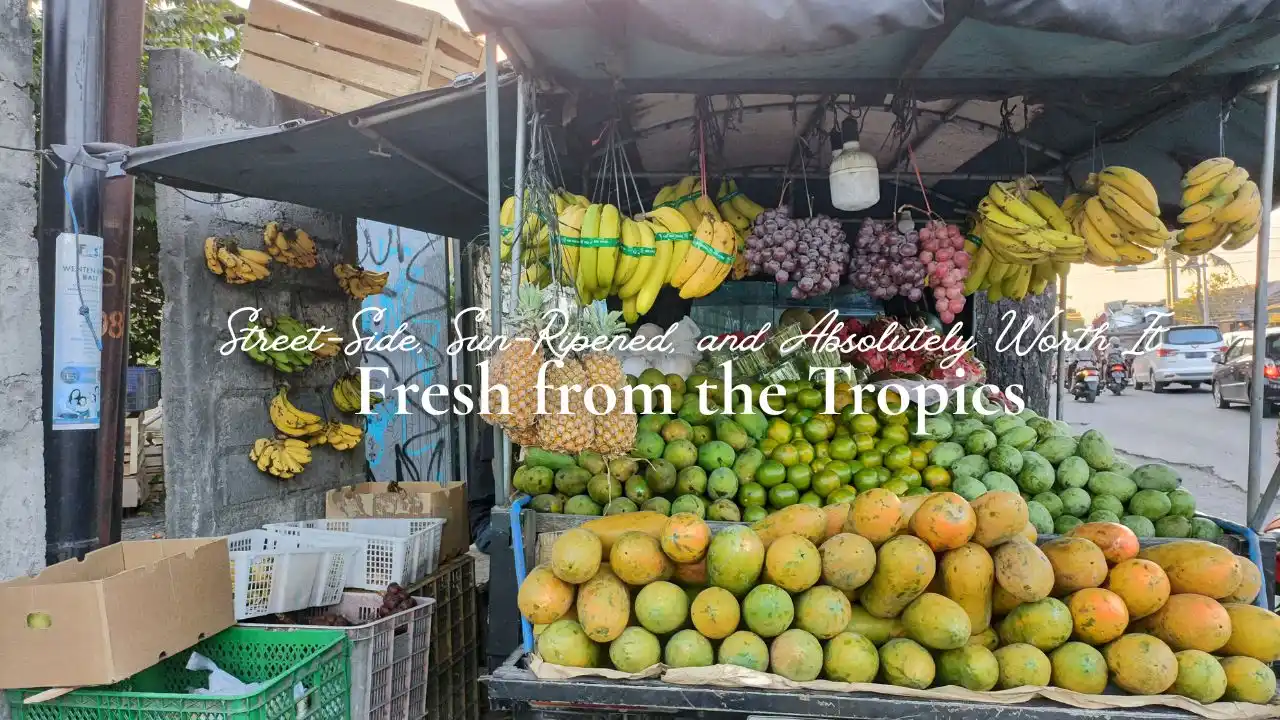
You'll spot these everywhere — small shops with colorful fruit piled out front.
Fruit plays a big role in Balinese offerings and ceremonies, so stalls can get especially busy around Galungan and Kuningan, the island's major holidays.
Certain fruits tend to appear specifically around these festival periods.
 YUKI
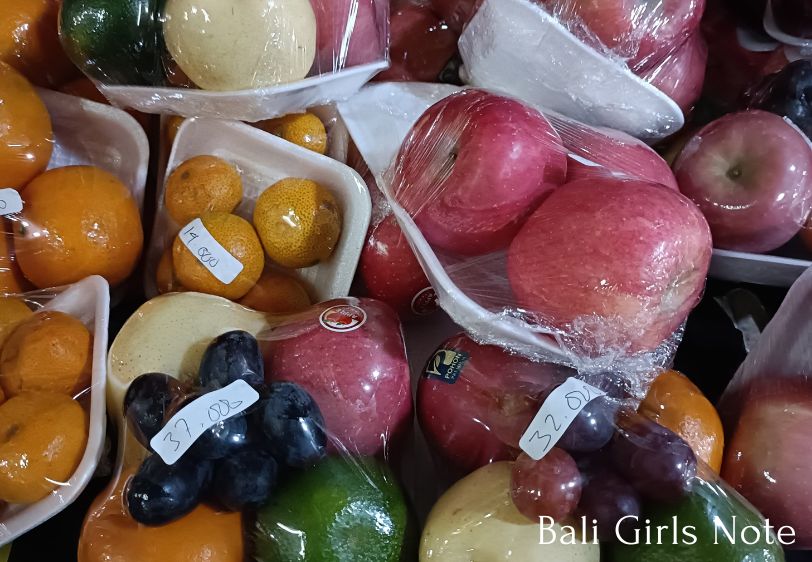
YUKIYou'll sometimes find fruit sets meant for offerings (though they're perfectly fine to eat). They're usually a good deal, so worth checking out if you spot one.
Local Markets
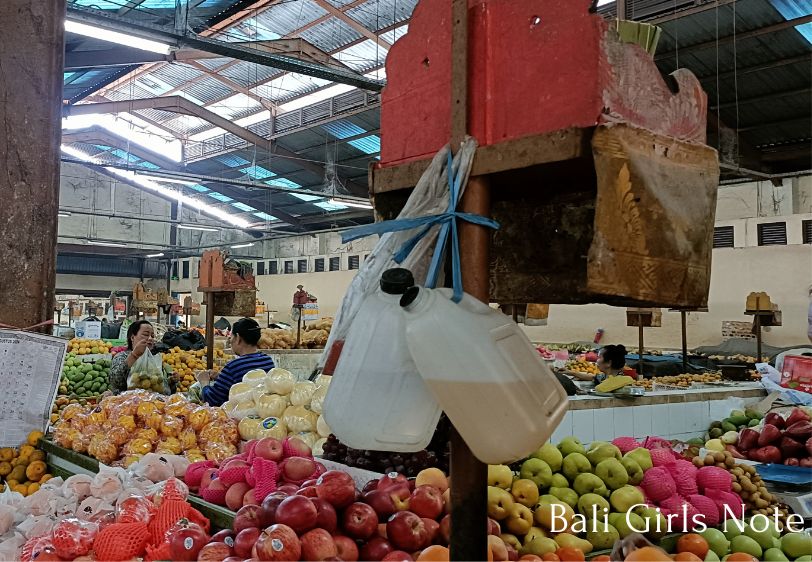
Markets are another great option, and Pasar Kerobokan is one of the easiest to shop in the central Bali area.
Fruit vendors cluster together in an open-air space facing the parking lot, making it simple to browse.
YUKICheck the locationhere.!
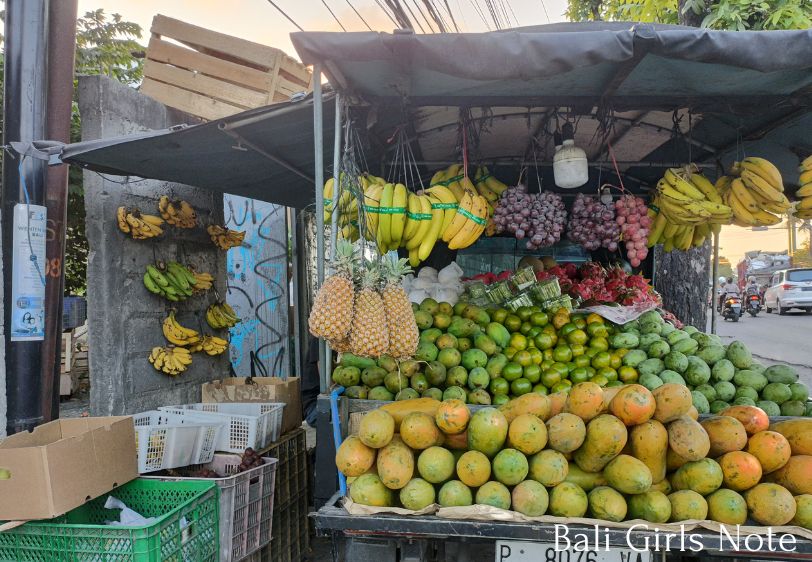
For seasonal fruit, keep an eye out for the fruit trucks common in Denpasar and the outskirts.
YUKIWhen durian season hits, you'll even see stalls dedicated entirely to durian.
Supermarkets & Convenience Stores
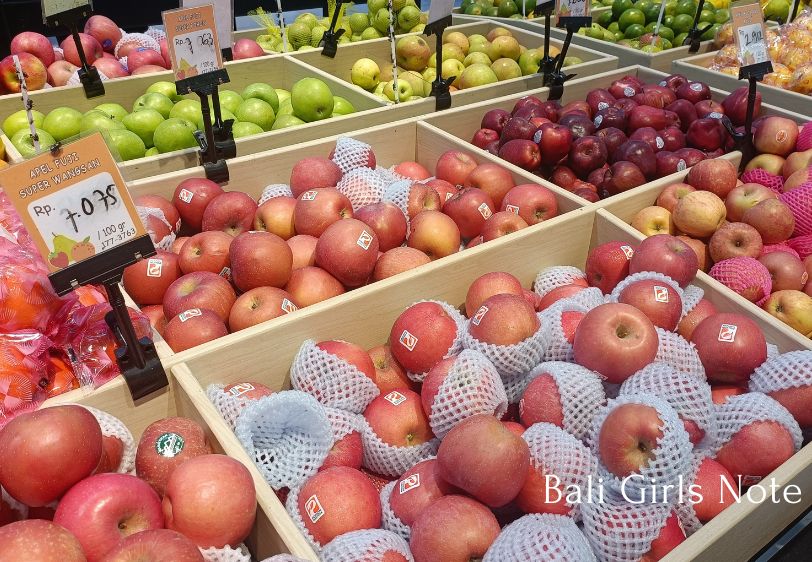
Supermarkets offer neatly arranged displays that make browsing easy. You might find five or six apple varieties, or three or four types of mango — a great way to see just how much variety Bali's fruit scene has.
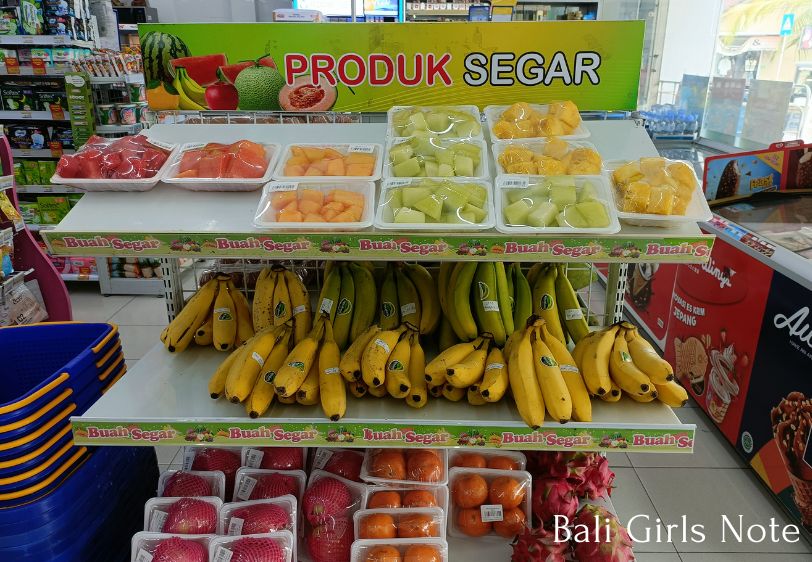
Convenience stores stock a smaller selection, and you generally can't buy loose by weight like at a market. Still, pre-cut fruit cups make for an easy grab-and-go option.
Must-Try Tropical Fruits
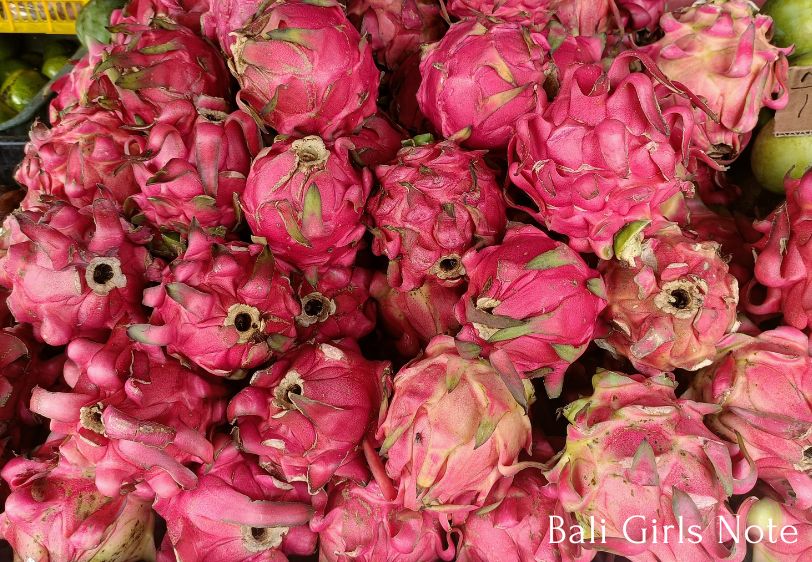
Prices vary by season, but expect around 25,000 IDR per kilogram (~$1.50).
Most dragon fruit in Bali is quite large, typically 600-900g each — so figure roughly $1-1.50 per piece.
Nearly Always in Season
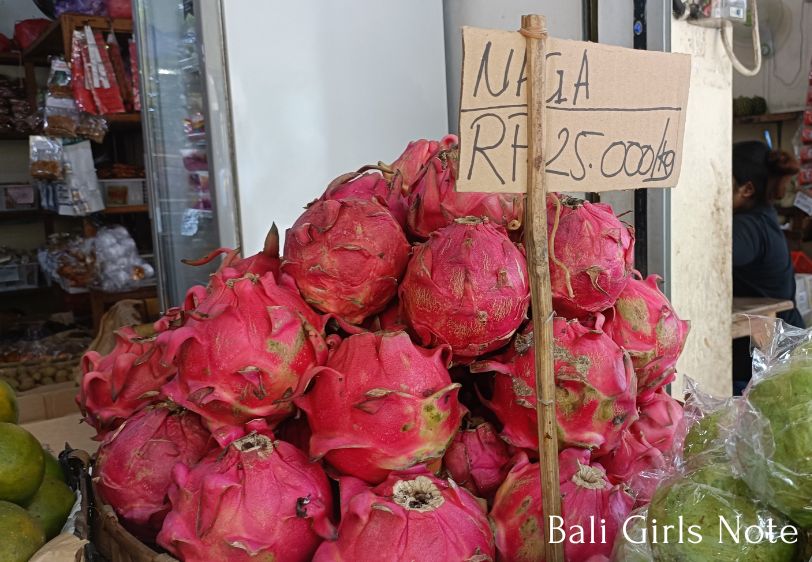
Some say dragon fruit has two peak seasons:
① Around November onward
② From April onward
But really, it's delicious almost any time of year.
The Easiest Way to Eat It
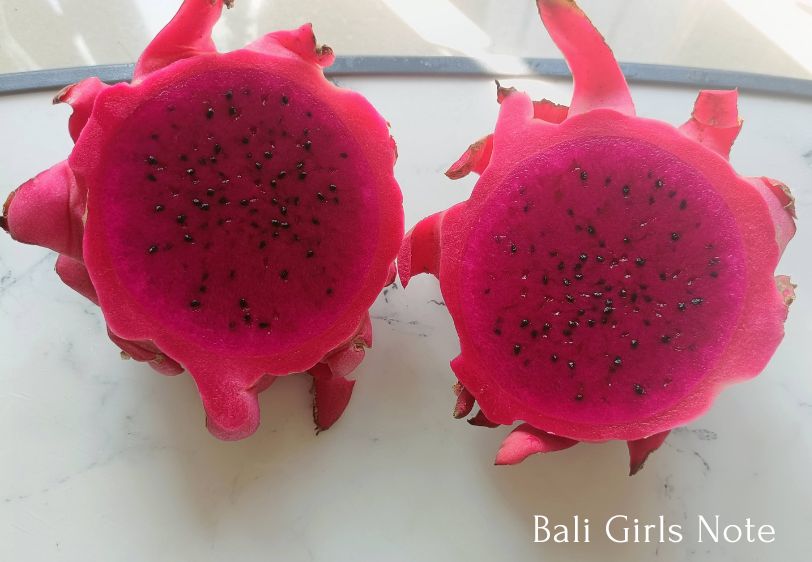
You'll need a knife to peel dragon fruit, but be warned — it stains your cutting board and knife bright pink (it washes off fine). The easiest method: slice it in half and scoop out the flesh with a spoon.
YUKISome say dragon fruit is bland, but a properly ripe one is actually wonderfully sweet.
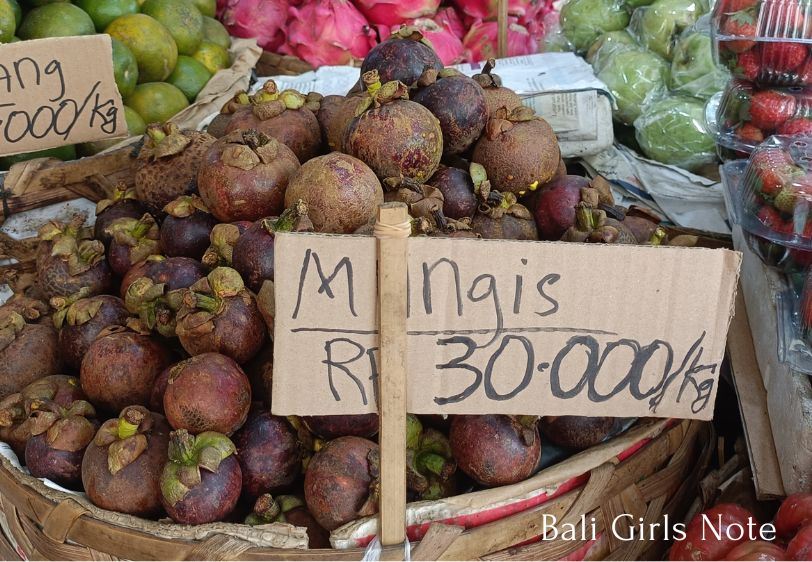
Known as the "Queen of Fruits," mangosteen is called manggis in Indonesian. Its rind is prized for anti-aging benefits and even shows up as a cosmetics ingredient.
Prices vary, but expect around 30,000 IDR per kilogram (~$2), which typically gets you 5-9 pieces at 100-200g each.
Best from November to April
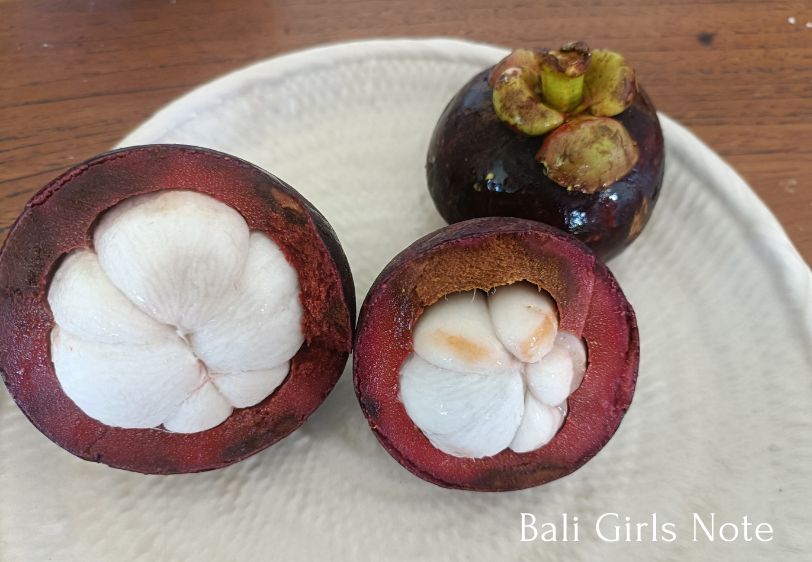
Beneath the tough outer shell is a plump, juicy white flesh with a sweet-tart flavor — genuinely delicious.
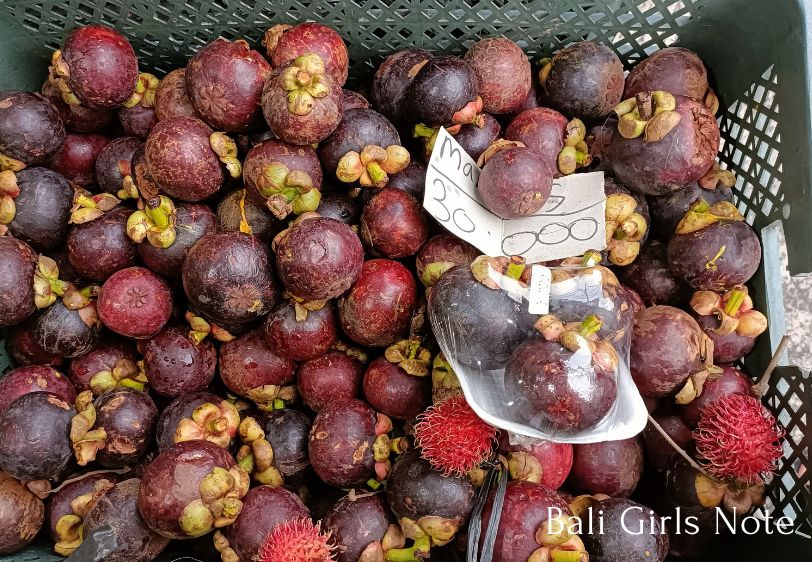
Skin color ranges from light to dark, so don't judge by that alone. Instead, give it a gentle squeeze — a little softness means it's ripe and ready to eat.
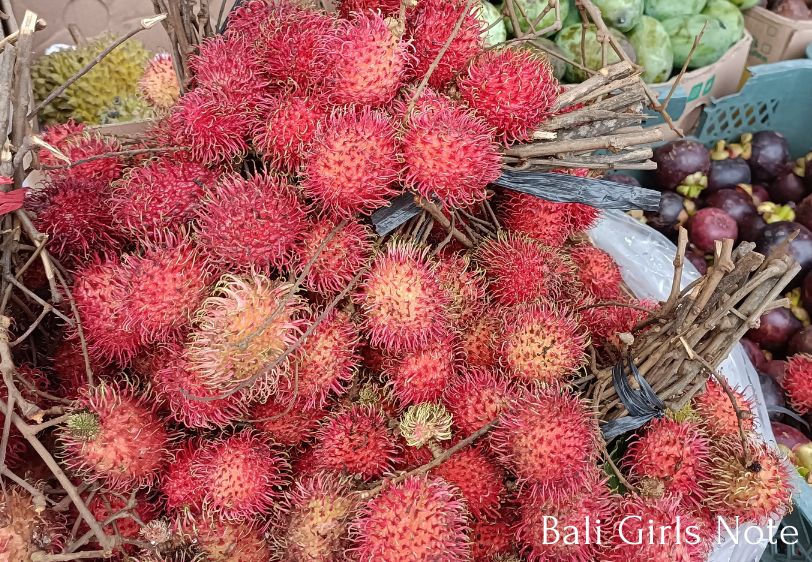
The name comes from rambut, Indonesian for "hair" — a nod to its spiky red shell.
YUKITrue to its name, the skin is covered in wild, hair-like spikes.
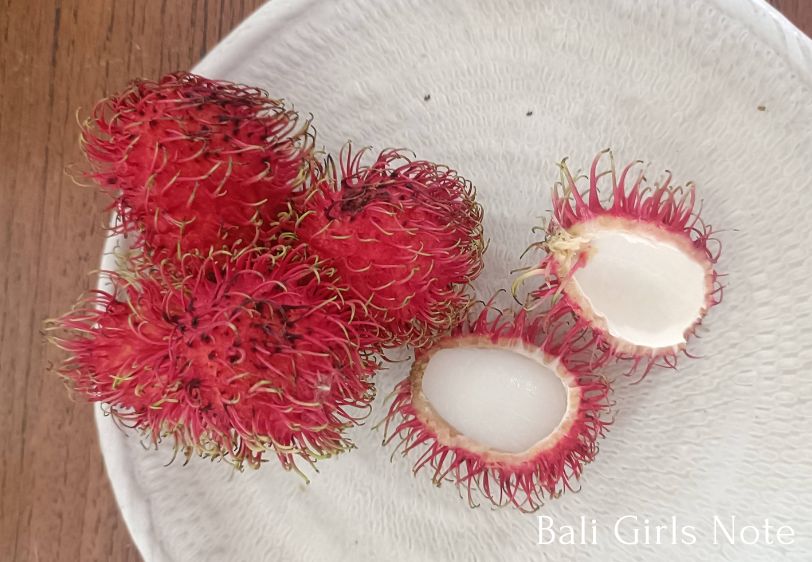
Crack it open, though, and you'll find a translucent white fruit inside that tastes a lot like lychee,
just slightly milder and less sweet.
Its season is short — November to February — and it's rarely seen outside that window, making it one of the more seasonal fruits on this list.
Rambutan grows in big clusters, but you don't have to buy the entire branch. At stalls pricing by the kilo, you can simply ask for the amount you want weighed out.
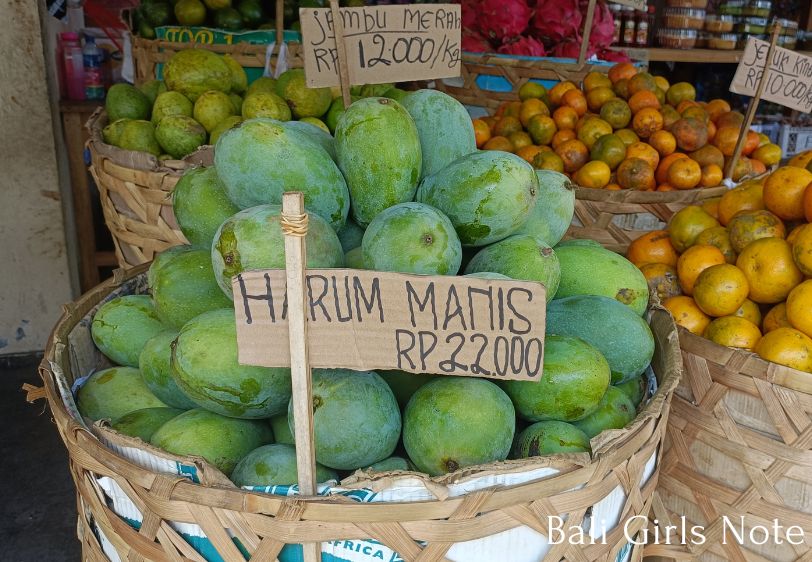
Sweet and juicy, mango has such a long growing window that you can find a good one almost anytime.
Expect around 20,000 IDR per kilogram (~$1.30), with individual mangoes ranging 200-900g — roughly $1-1.30 apiece.
Since it's grown all across Indonesia, mango barely has an off-season at all.
YUKIThere are around seven major varieties, and Harum Manis stands out as a favorite for its strong sweetness and aroma.
A Few More Worth Trying
Sugar Apple: Sweet & Custardy
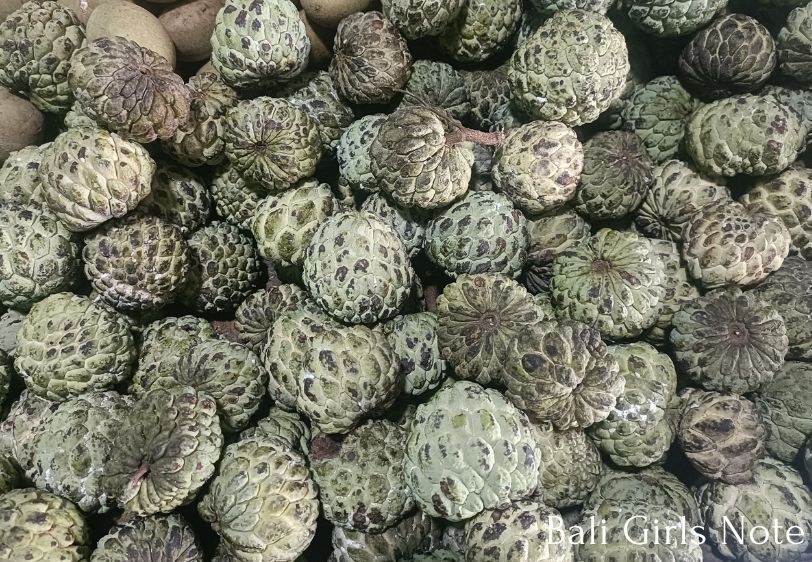
Also known as srikaya, this fruit hides a soft,
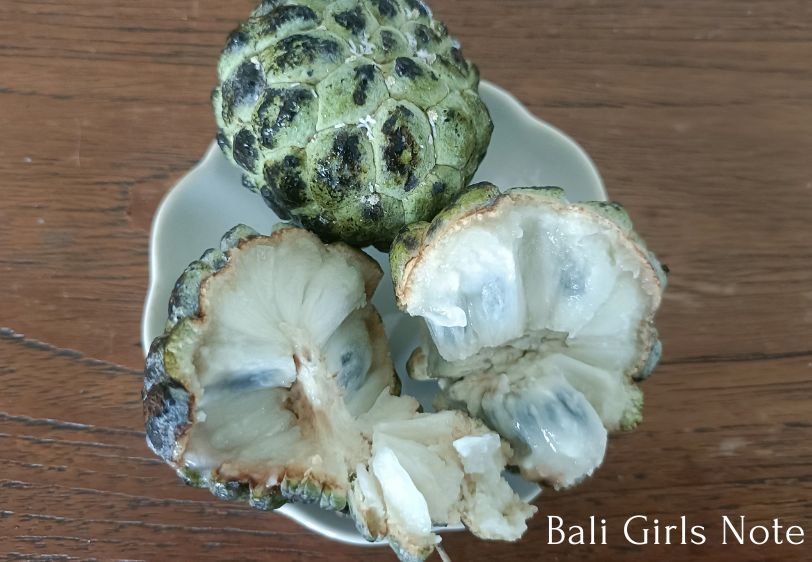
, custard-like flesh beneath its bumpy green skin.
YUKIA local fruit vendor told me the best way to enjoy a ripe sugar apple is simply scooping it out with a spoon.
Papaya: A Health Staple
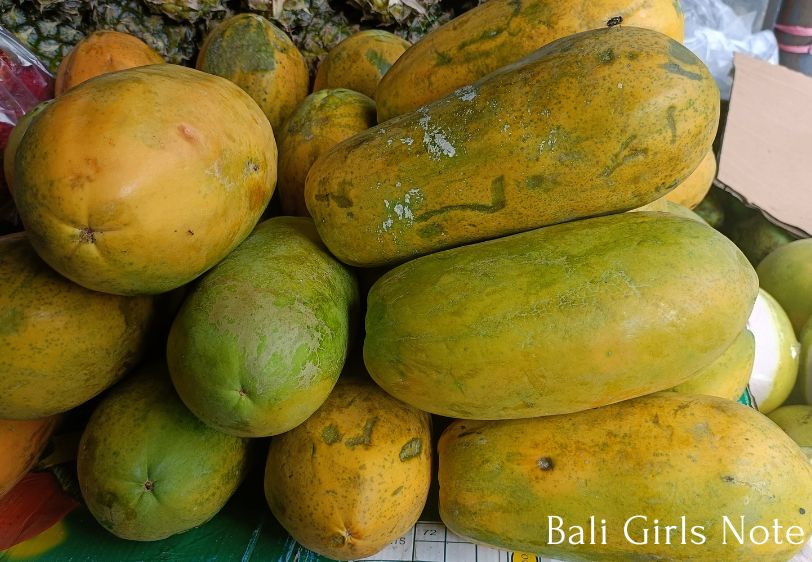
Packed with enzymes, papaya is a go-to fruit for digestion and healthy aging.
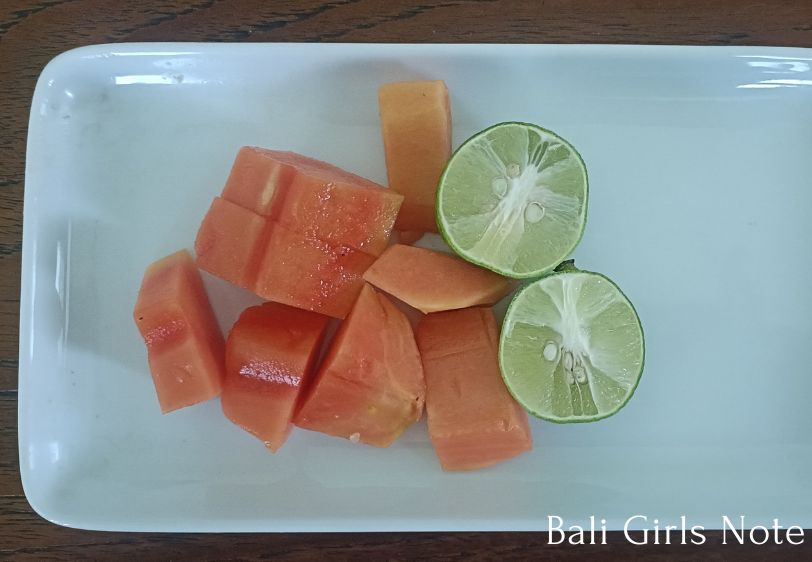 YUKI
YUKIIt's tasty on its own, but try adding a squeeze of lime — it brings out the sweetness and makes the papaya flavor really pop.
Passion Fruit: Addictively Tart
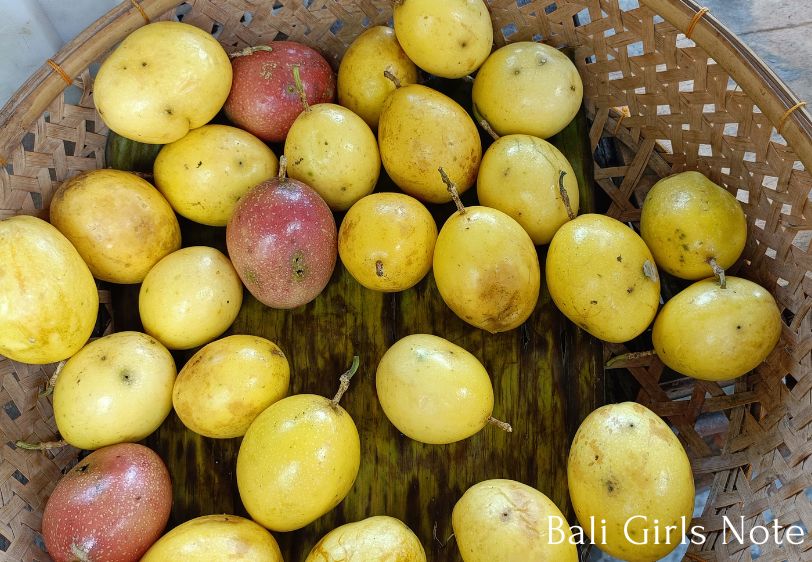
With its bold sweet-tart punch, passion fruit is best enjoyed by slicing it open and spooning out the seeds and pulp.
YUKIThat said, the seeds can make it a bit fiddly to eat, so honestly, it's even better as a juice.
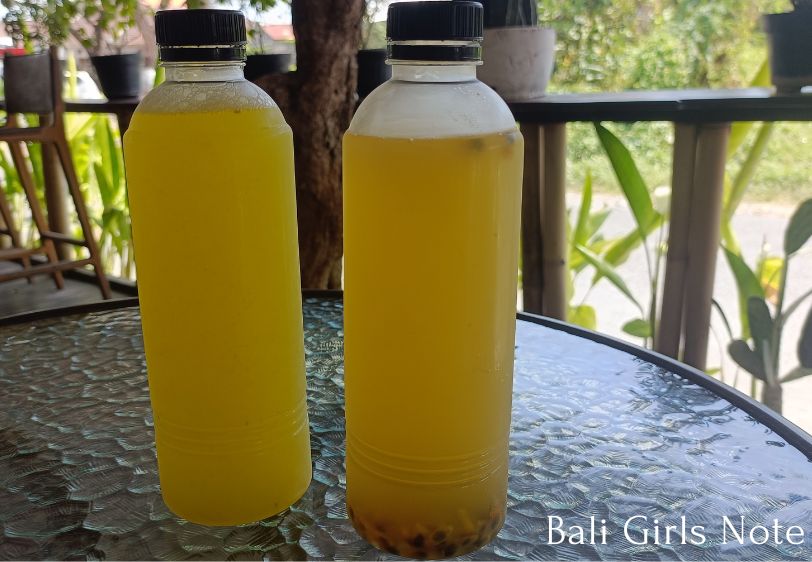
Fresh passion fruit juice shows up on menus at plenty of cafes around the island — worth ordering whenever you spot it.
The Takeaway
And that's just scratching the surface — Bali's tropical fruit scene has far more to offer than we could fit here.
Try as many as you can during your stay.
For more local Bali food finds:
・Grilled Sweet Potato: Even Better Cold?
・4 Best Spots for Nasi Campur, Bali's National Dish
・A Local's Picks: Best Bali Eats
\ Stay Connected with an eSIM /
👉 Browse eSIM Options for Bali
YUKISee you in the next post!